TRANSPORT · c. 1900
Inside the Victorian Railway Station
A small Swedish station photograph reveals how railways brought machines, workers and communities together in the age of steam.
 PUBLIC DOMAIN
Unknown photographer · Wikimedia Commons. View image record and licensing →
A station as a social space
Railway history is often told through locomotives. The station is just as important. A platform was where timetables became daily life: passengers arrived, goods were moved, workers handled signals and trains connected small communities to larger cities.
Steam and routine
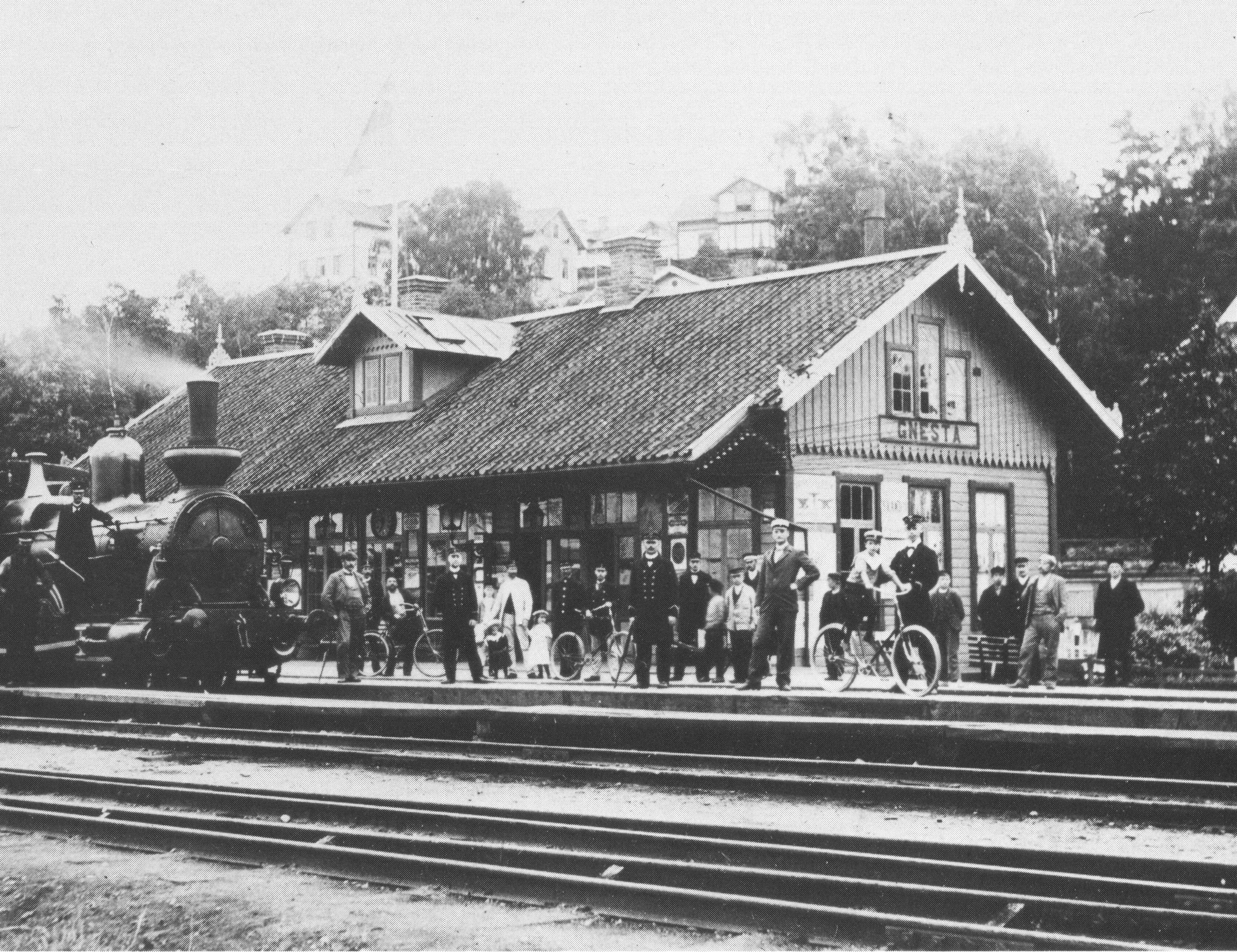
The photograph shows Gnesta railway station in Sweden around 1900. The building is modest, but the scene is full of activity. People pose beside the platform, a steam locomotive occupies the track, and bicycles sit among the objects of everyday travel.
The people around the machine
By this period, railways had already transformed Europe. They shortened travel times, made new forms of commuting possible and connected agricultural regions to urban markets. Stations became recognizable civic buildings, often designed with distinctive architectural details even when the towns they served were small.
Why it matters
What makes the photograph valuable is the mixture of technology and ordinary life. The locomotive is the obvious marvel, but the people are the real evidence of change. Railways worked because communities learned to organize their days around departures, arrivals and reliable schedules.
This image is presented from Wikimedia Commons. The file is marked Public domain on its source record. ARVREN keeps the source page linked so the provenance and licensing information can be checked directly. Rights status can vary by jurisdiction; verify the source record before republishing the image outside this site.
Open the original source record →